Twilio SMS & Zoho CRM Extension Installation & Authorization
Step 1: Go to Zoho marketplace
and
install the extension following the below steps.
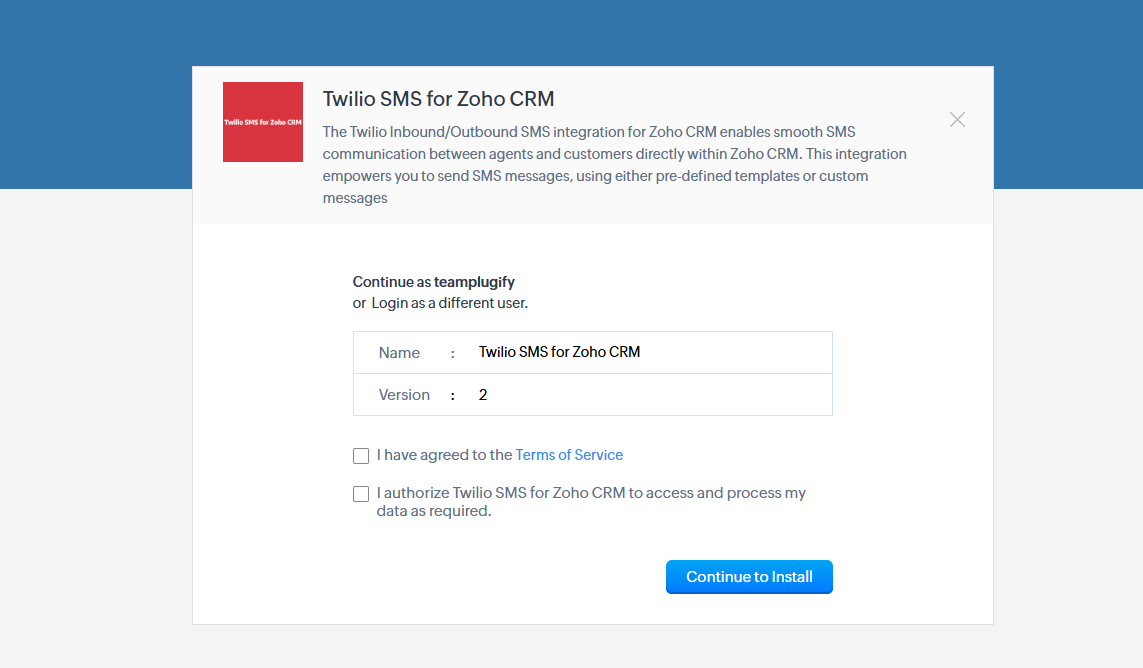
Step 2: Select the checkbox to agree to the terms and conditions and click
Continue.
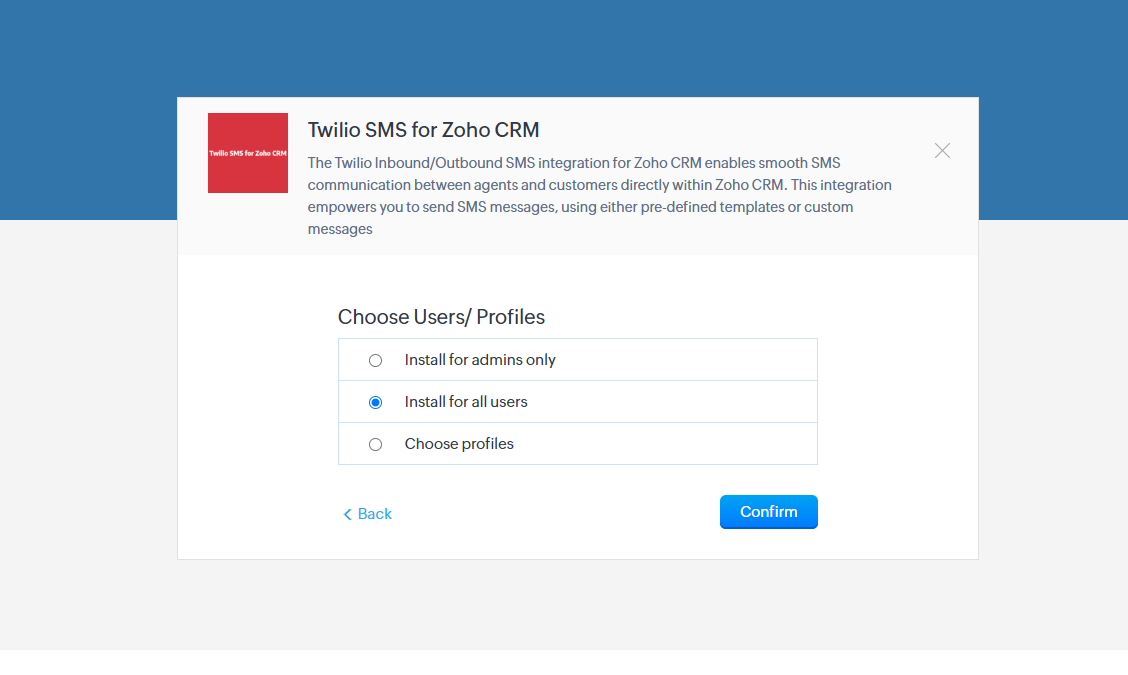
Step 3: Choose the profiles to whom you want to install the application in Zoho CRM and
click Continue.
Step 4: Once the extension has been successfully installed, the following window will
appear.
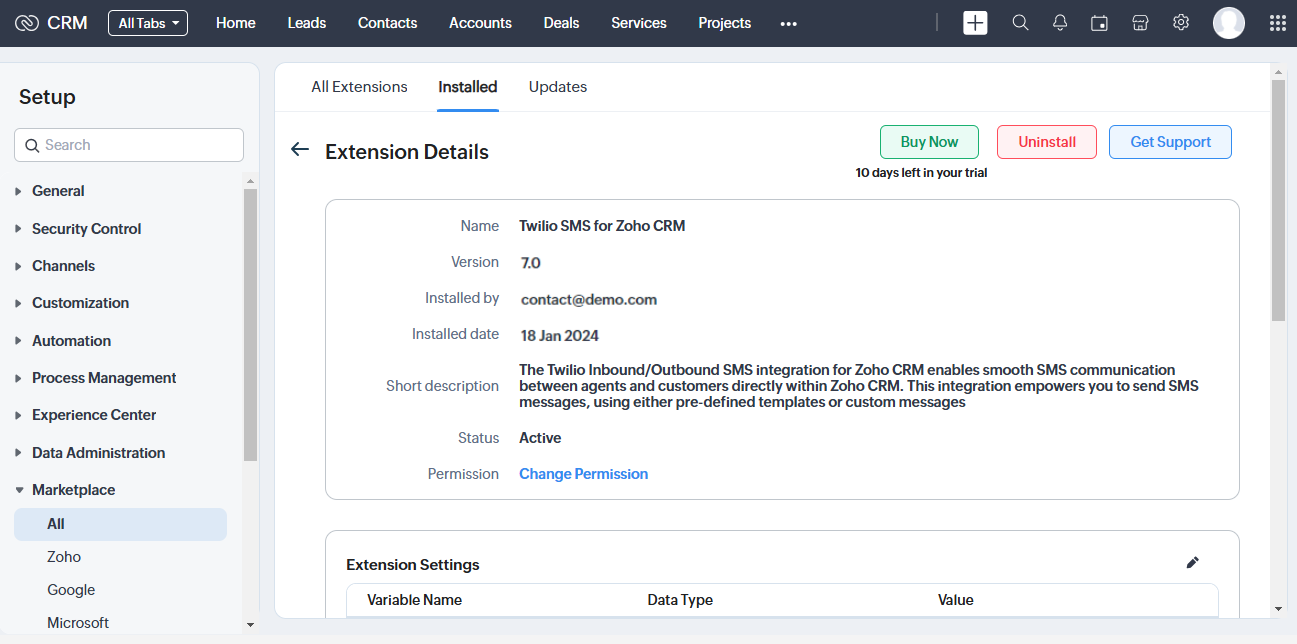
Step 5: To authorize the extension, click the Edit icon in the extension settings. Then, provide the following details:
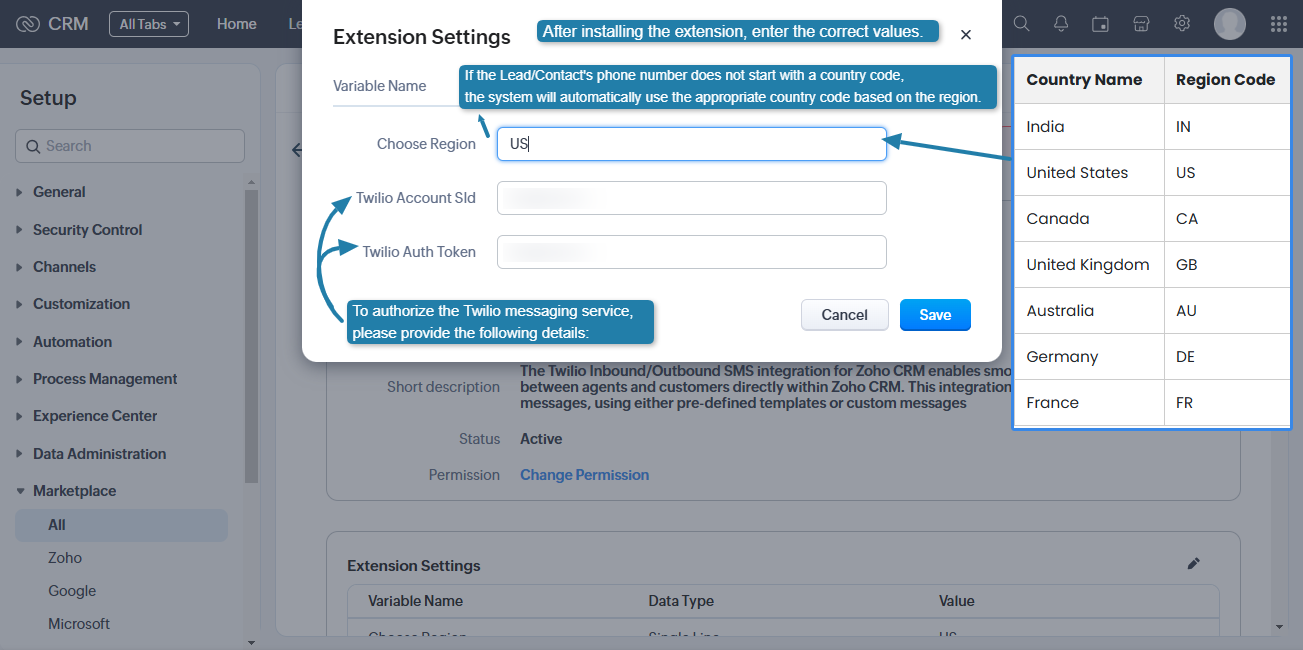
- Region:
- Enter your Twilio Region Code in the designated field.
- You can find your Region Code in the attached screenshot below
- Twilio Account SID:
- Your Account SID is a unique identifier for your Twilio account.
- Log in to your Twilio Console.
- On the Dashboard, your Account SID will be visible on the main page, usually under the Project Info section.
📷 See Step 6 screenshot for reference. - Twilio Auth Token:
- The Auth Token is used to securely authenticate your integration with Twilio.
- In the same Twilio Console, under the Project Info section, you’ll find your Auth Token next to your Account SID.
- You may need to click the eye icon to reveal the token.
📷 See Step 6 screenshot for reference.
Step 6: Log in to your Twilio account and navigate to the Twilio Dashboard
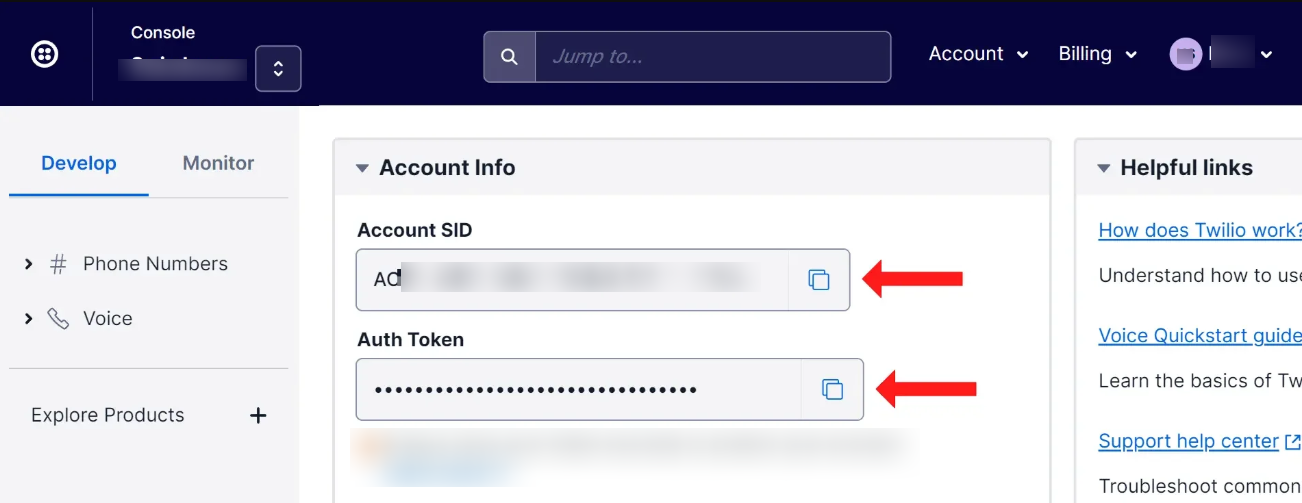
📷 Refer to the screenshot below for a visual guide to the Twilio Dashboard layout.
On the dashboard, you’ll find the necessary details such as your Account SID & Auth Token (as
referenced in Step 5).
Step 7: If you do not have a sender number, you will need to purchase one by clicking the
"Buy a Number" button, as shown in the screenshot below.
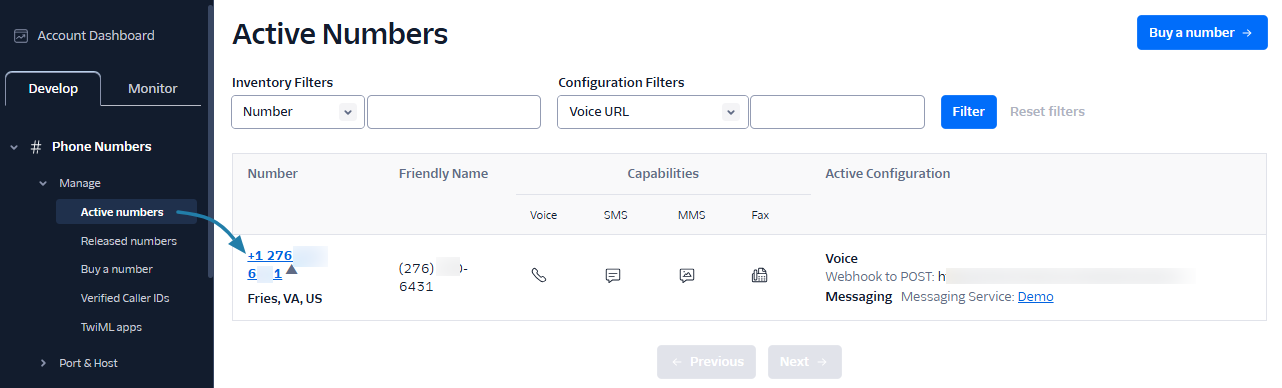
📍 Click here to navigate
directly to the page where you can purchase a Twilio number.
Step 8: Configure the required options in the Extension Settings window.
Enter or verify the following settings:
Once all the required information has been entered or verified, click Save to store the extension settings.
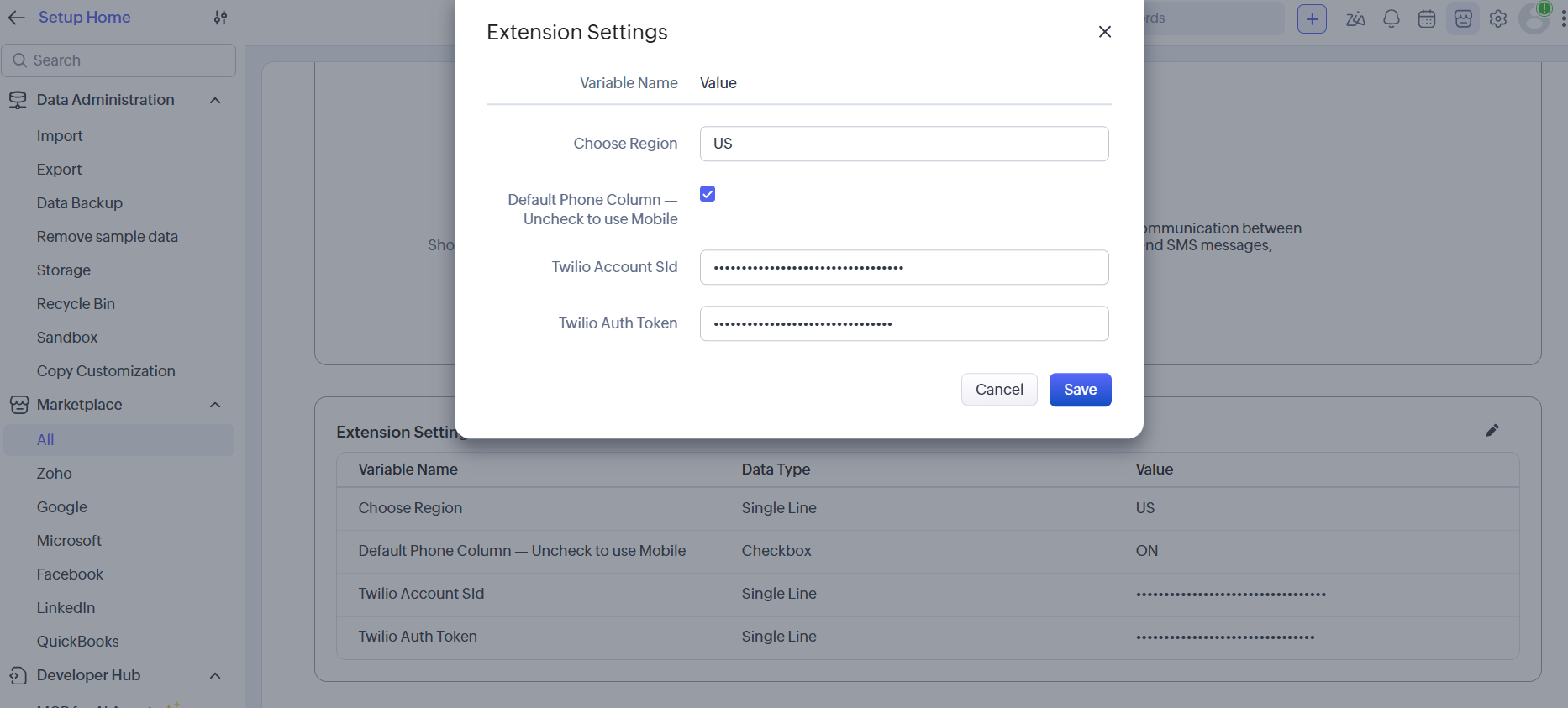
Enter or verify the following settings:
- Choose Region – Select the region associated with your Twilio account.
- Default Phone Column — Uncheck to use Mobile – Keep this option checked to use the default phone field, or uncheck it to use the Mobile field.
- Twilio Account SID – Enter your Twilio Account SID.
- Twilio Auth Token – Enter your Twilio Auth Token.
Once all the required information has been entered or verified, click Save to store the extension settings.
Step 9: Navigate to the "Leads" module in Zoho CRM and open a specific lead
record. From the lead record, click the "Send Twilio Message" button to open the messaging window.
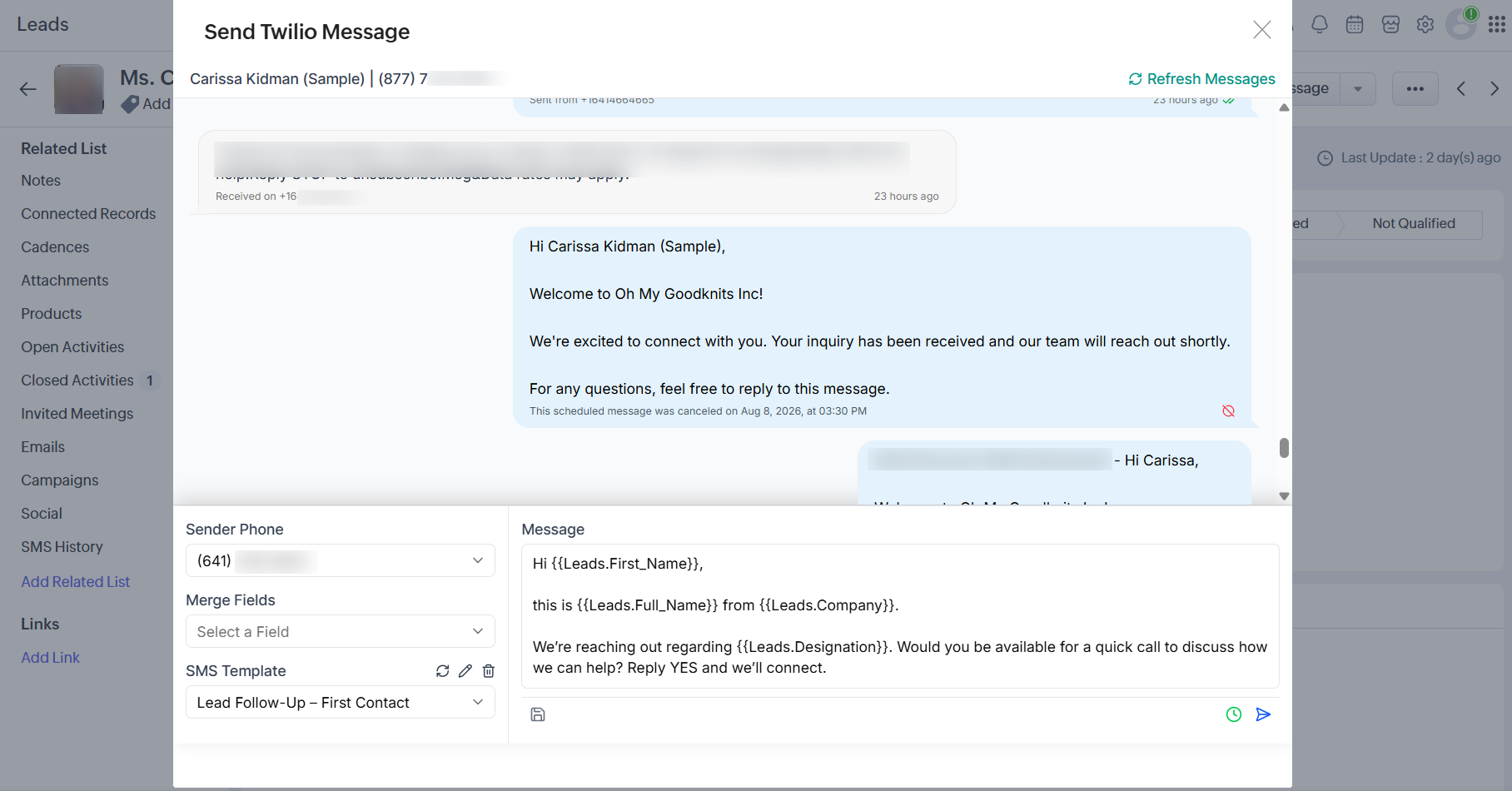
📷 Refer to the attached screenshot to identify the "Send Twilio Message" window and its
available options.
The messaging window allows you to send a custom SMS or use an existing
SMS template. You can also personalize your message using Merge Fields.
Within the messaging window, you will find the following options:
-
Sender Phone:
Select the Twilio phone number that you want to use as the sender of the SMS. -
Merge Fields:
Select a CRM field from the dropdown to insert its value dynamically into your message. For example, you can use fields such as{{Leads.First_Name}}to personalize the message for each lead. -
SMS Template:
Select a predefined SMS template from the dropdown. The selected template will populate the message area automatically.
Use the Refresh icon to reload and fetch the latest available templates. The Edit and Delete icons can be used to manage the selected template, when applicable. -
Message:
Enter or edit the SMS content directly in the message box. You can combine custom text with merge fields to create personalized messages.
After preparing the message, you can:
- Click the Save icon to save the message/template content, when required.
- Click the Send button to send the SMS immediately.
- Click the separate clock icon located to the left of the Send button to open the Schedule SMS window and schedule the message for later delivery.
Step 10: After clicking the separate clock icon located to the left of the
Send button, the Schedule SMS window will appear.
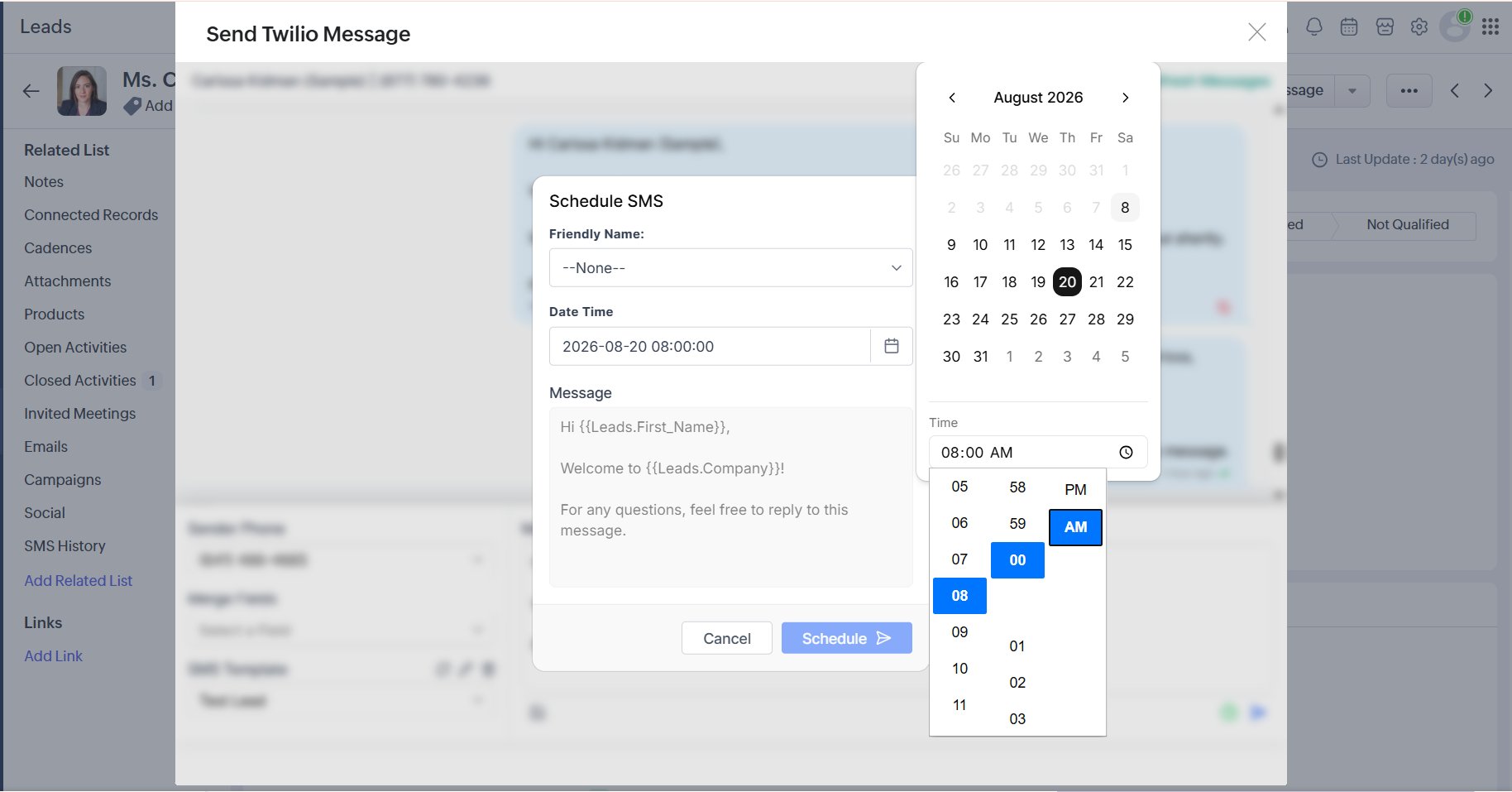
📷 Refer to the attached screenshot to identify the Schedule SMS window and its available
options.
In the Schedule SMS window, you can configure the details of your scheduled message:
-
Friendly Name:
Select a friendly name from the dropdown, if available, to identify the scheduled SMS. -
Date Time:
Select the date and time when you want the SMS to be delivered. You can use the calendar and time picker to select the desired date and time. -
Message:
Review the message that will be scheduled for delivery. The message can include Merge Fields, such as{{Leads.First_Name}}and{{Leads.Company}}, which will be replaced with the lead's information when the message is sent.
After selecting the required date and time and reviewing the message, click the
Schedule button to schedule the SMS for later delivery.
Note: Make sure the selected Date Time is correct before clicking
Schedule. The message will be sent according to the scheduled date and time.
Step 11: Within each Lead record, you will find a related list called SMS
History.
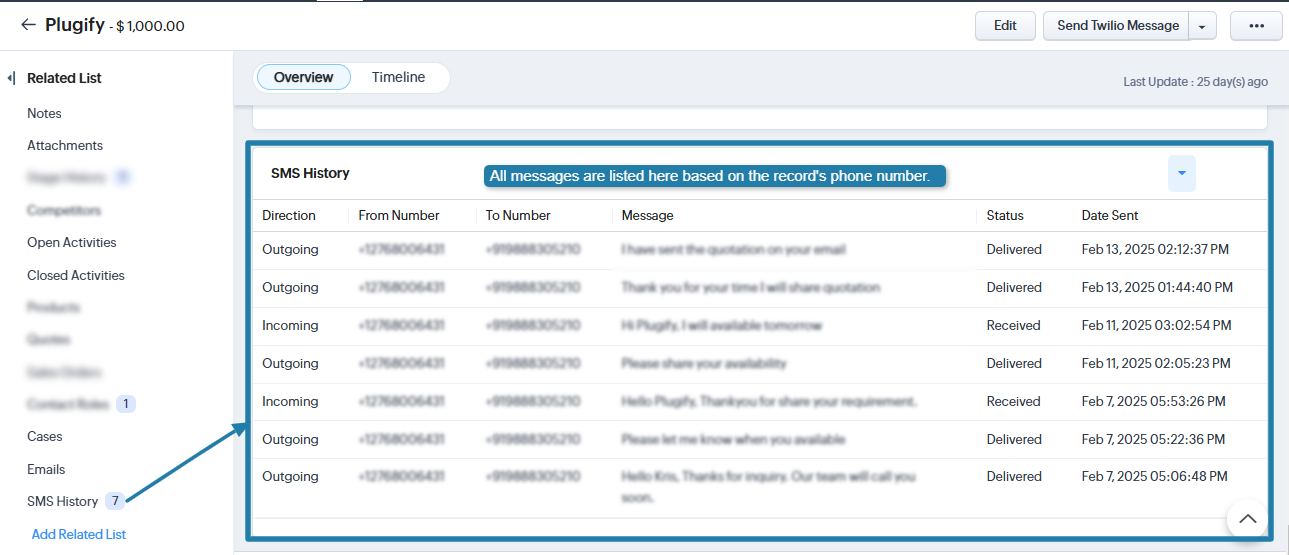
This section displays a complete log of outgoing and incoming SMS messages
associated with that specific lead’s phone number.
📄 Use this history to track past conversations, ensure message delivery, and maintain communication
records directly within the CRM.
Step 12: Create and Manage SMS Templates
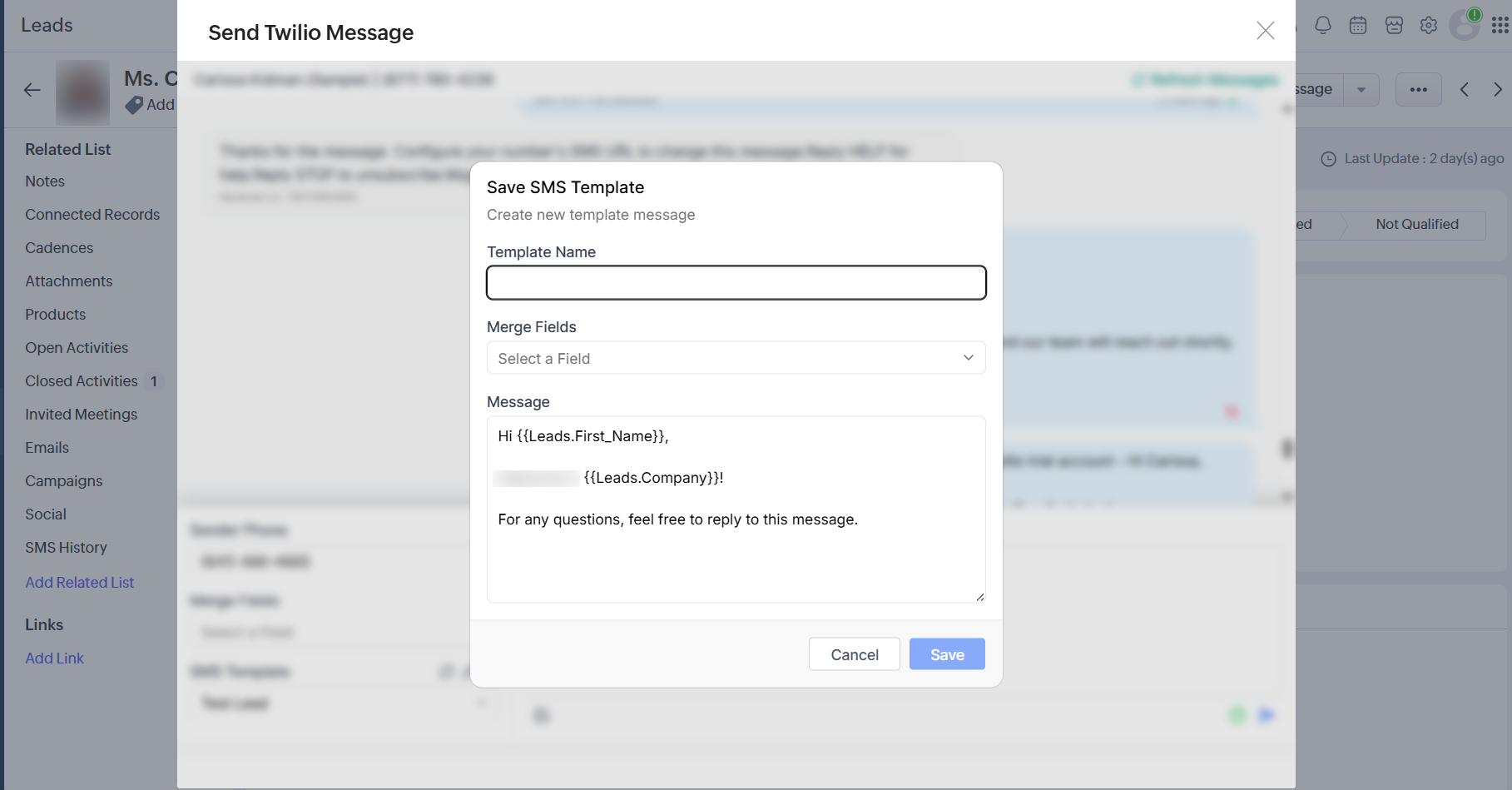
While composing a one-on-one SMS, users can save the message as a template
using the Save icon. Enter a unique template name and use
Merge Fields to insert dynamic Lead fields into the message.
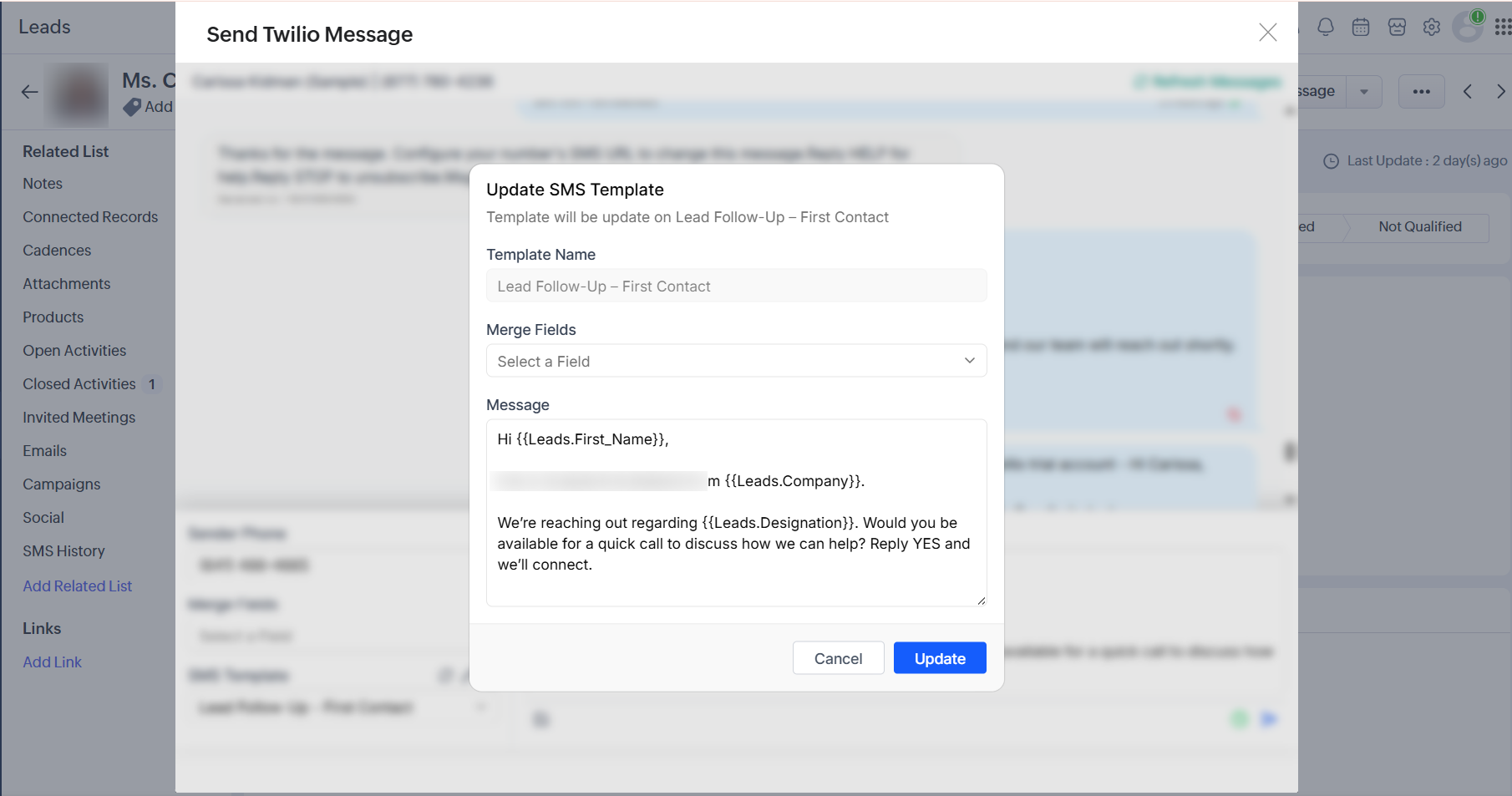
Once a template is selected, users can:
- Click the Edit (pencil) icon to update the template message.
- The template name cannot be changed.
- Click the Delete (trash) icon to remove the template.
- Use the Save icon to create a new template.
Note: Templates are module-specific. A template created in
the Leads module will only be available when sending SMS
from the Leads module.
Create a New SMS Template
Update an Existing SMS Template
Step 13: To send bulk SMS messages, follow the steps below:
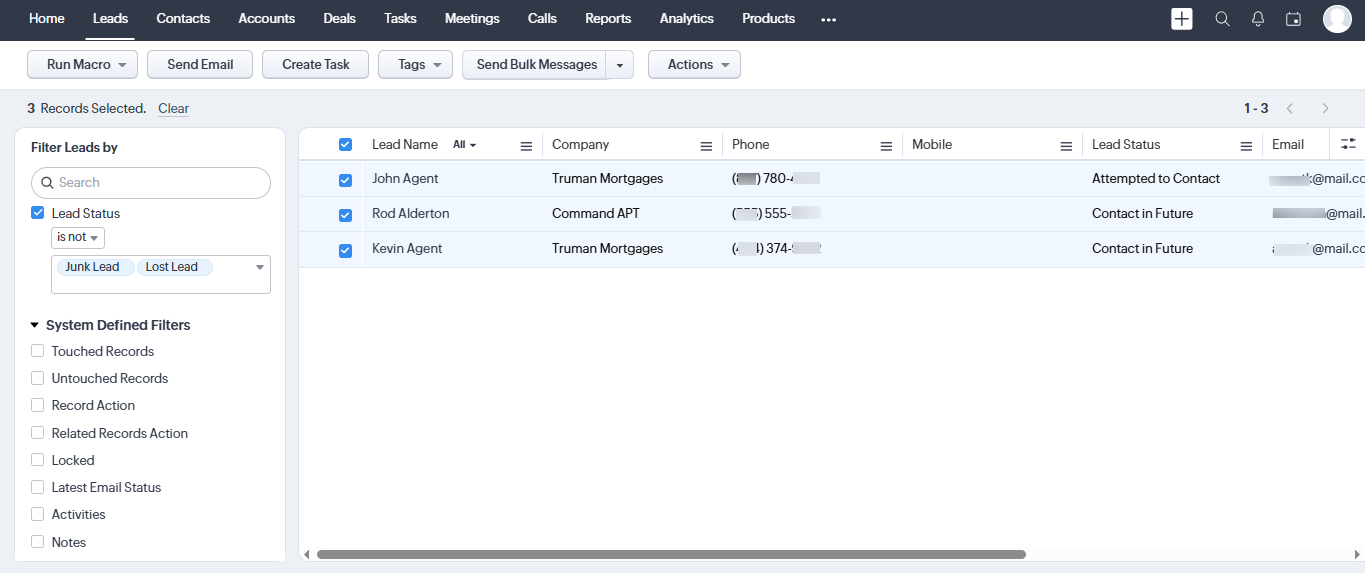
- Navigate to the Leads module.
- Select the desired lead records manually, or use filters to narrow down the records you want to message.
- Once the required records are selected, click the "Send Bulk Messages" button in the top toolbar.
This will open the Bulk SMS popup window, where you can compose and send a message to all selected leads at once.
💡 You can select multiple leads manually or use filters to target a specific
group of leads before clicking "Send Bulk Messages".
Step 14: Configure and Send Bulk SMS
The Bulk Messages window lets you review recipients, select a sender service
and SMS template, personalize the message, and send the SMS to eligible contacts.
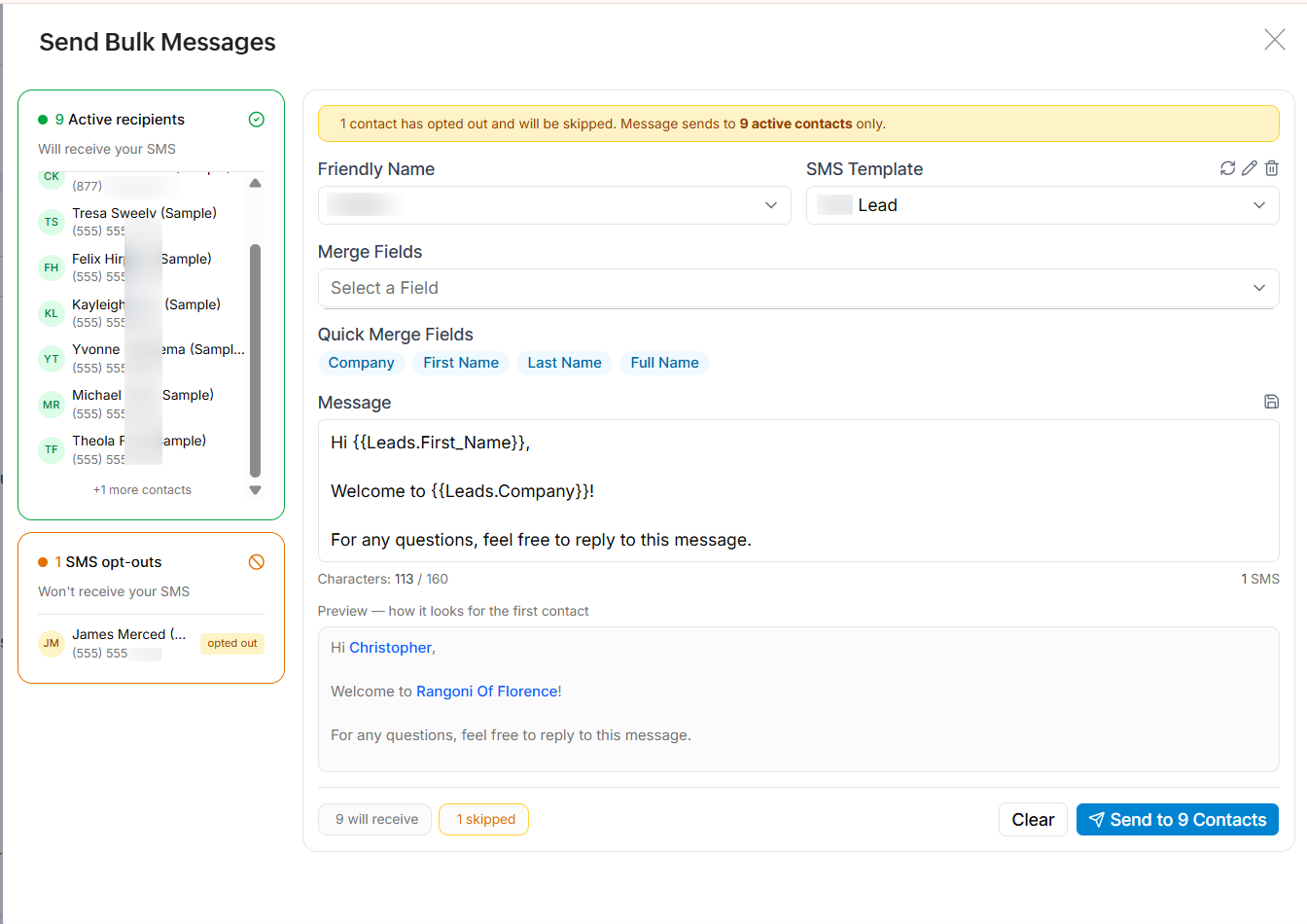
Key features of the Bulk Messages interface:
-
Active Recipients
- Shows contacts who are eligible to receive the SMS.
- The total number of active recipients is displayed at the top of the panel.
-
SMS Opt-outs
- Shows contacts who have opted out of SMS communication.
- Opted-out contacts are automatically skipped and will not receive the message.
-
Friendly Name
- Select the appropriate Twilio messaging service used to send the SMS.
-
SMS Template
- Select an existing SMS template for the bulk message.
- You can also manage templates using the available refresh, edit, and delete options.
-
Merge Fields & Quick Merge Fields
- Insert dynamic Lead information into the message, such as First Name, Last Name, Full Name, or Company.
- These fields are automatically replaced with the corresponding information for each recipient.
-
Message & Preview
- Review or edit the SMS content before sending.
- The preview displays the message using the data from the first active recipient as an example of how the SMS will appear.
- If a merge field is empty for the first recipient, that field may appear blank in the preview. This preview is only an example and does not represent the message for every recipient.
- The character count and number of SMS segments are displayed below the message.
-
Send Summary
- Displays how many contacts will receive the message and how many will be skipped.
- Click Send to [Number] Contacts to send the bulk SMS.
Preview Note: The preview is generated using the first active
recipient's information. If a field such as First Name or Company is empty
for that recipient, the corresponding value will appear blank in the preview.
This is only an example of how the message will look after merge fields are
applied to a recipient.
Step 15: Within each Lead record, there is an "SMS Opt-out" checkbox field.
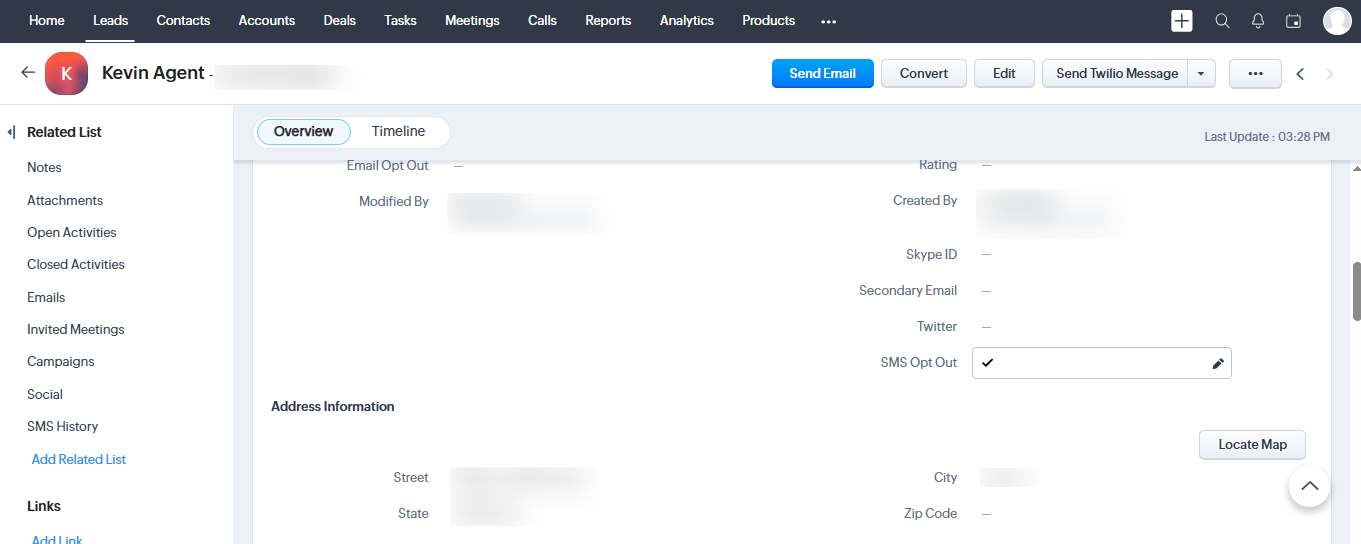
- When this checkbox is checked, the lead is marked as opted out of receiving SMS messages.
- When unchecked, the lead is considered eligible to receive SMS communications through the extension.
📌 This field helps maintain compliance with communication preferences and ensures messages are only sent to leads who have opted in.
Step 16: You can also automate SMS messages using
Workflow Rules in Zoho CRM. This allows you to send a predefined or
dynamically customized SMS automatically when a specific workflow condition
is met.
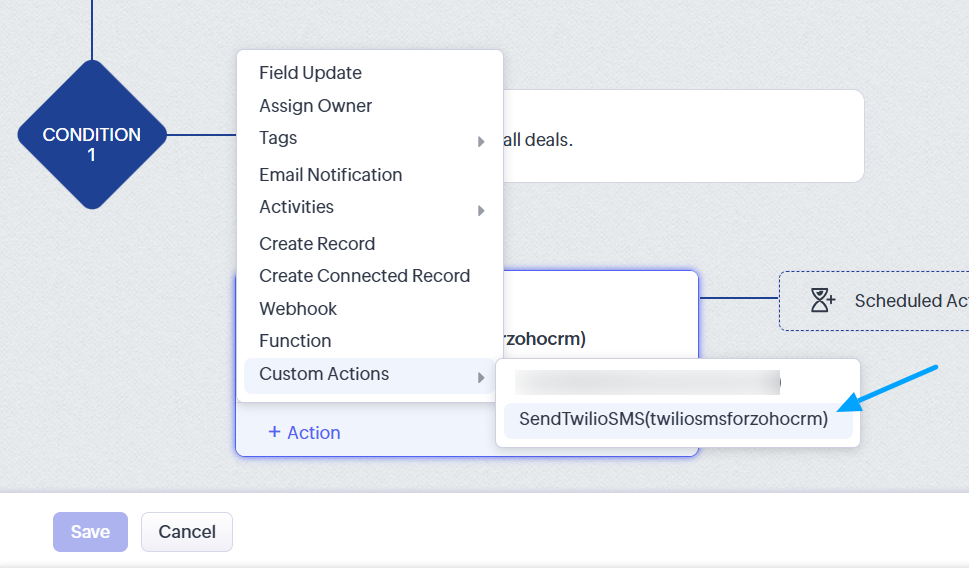
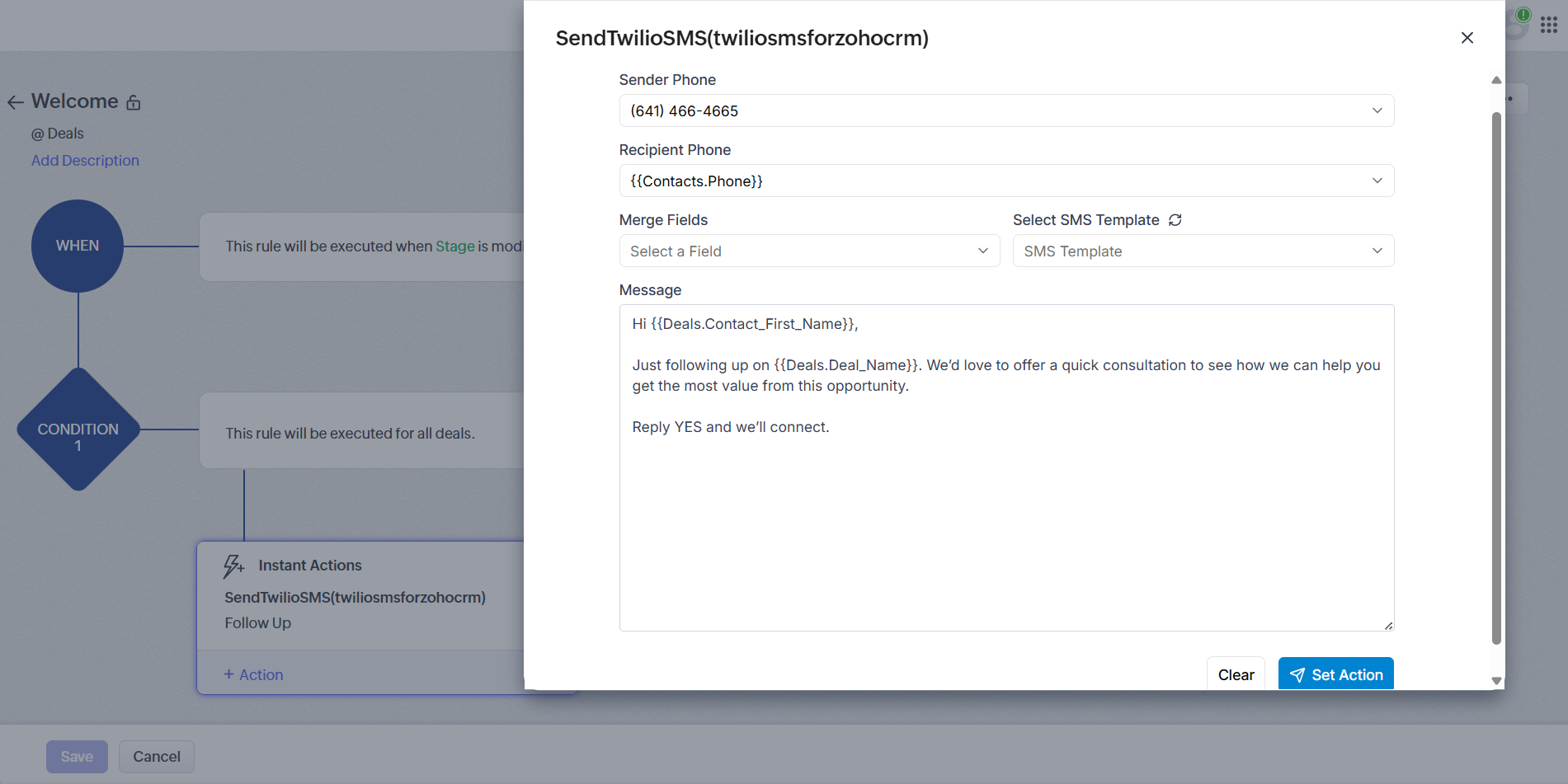
📷 The screenshots below show how to add the Twilio SMS extension as a
Custom Action and configure the SMS within a Zoho CRM Workflow Rule.
To configure an automated SMS workflow:
- Create or open a Workflow Rule in Zoho CRM and configure the required trigger and conditions according to your business requirements.
- Under Instant Actions, click + Action and select Custom Actions.
- Select the Twilio SMS custom action SendTwilioSMS(twiliosmsforzohocrm).
- In the SMS configuration window, select the appropriate Sender Phone and Recipient Phone.
-
Use Merge Fields to insert dynamic CRM values into the SMS.
For example, fields such as
{{Deals.Contact_First_Name}}or{{Deals.Deal_Name}}can be used to personalize the message. - You can either select a predefined SMS Template or create a custom message directly in the Message field.
- After configuring the SMS content, click Set Action to add the Twilio SMS action to the workflow.
Once the workflow is saved and activated, the configured Twilio SMS action
will automatically trigger when the workflow's specified conditions are met.
This allows you to send personalized SMS messages without manually sending
them from the CRM record.
💡 Example: A workflow can be configured to send a follow-up SMS when
a Deal reaches a specific stage. The message can dynamically use Deal and
Contact merge fields, so each recipient receives a personalized message
based on their CRM data.
Step 17: Incoming SMS messages can also be received and viewed directly
within Zoho CRM. When a customer replies to a message sent through the Twilio
integration, the incoming SMS is captured and displayed in the CRM.

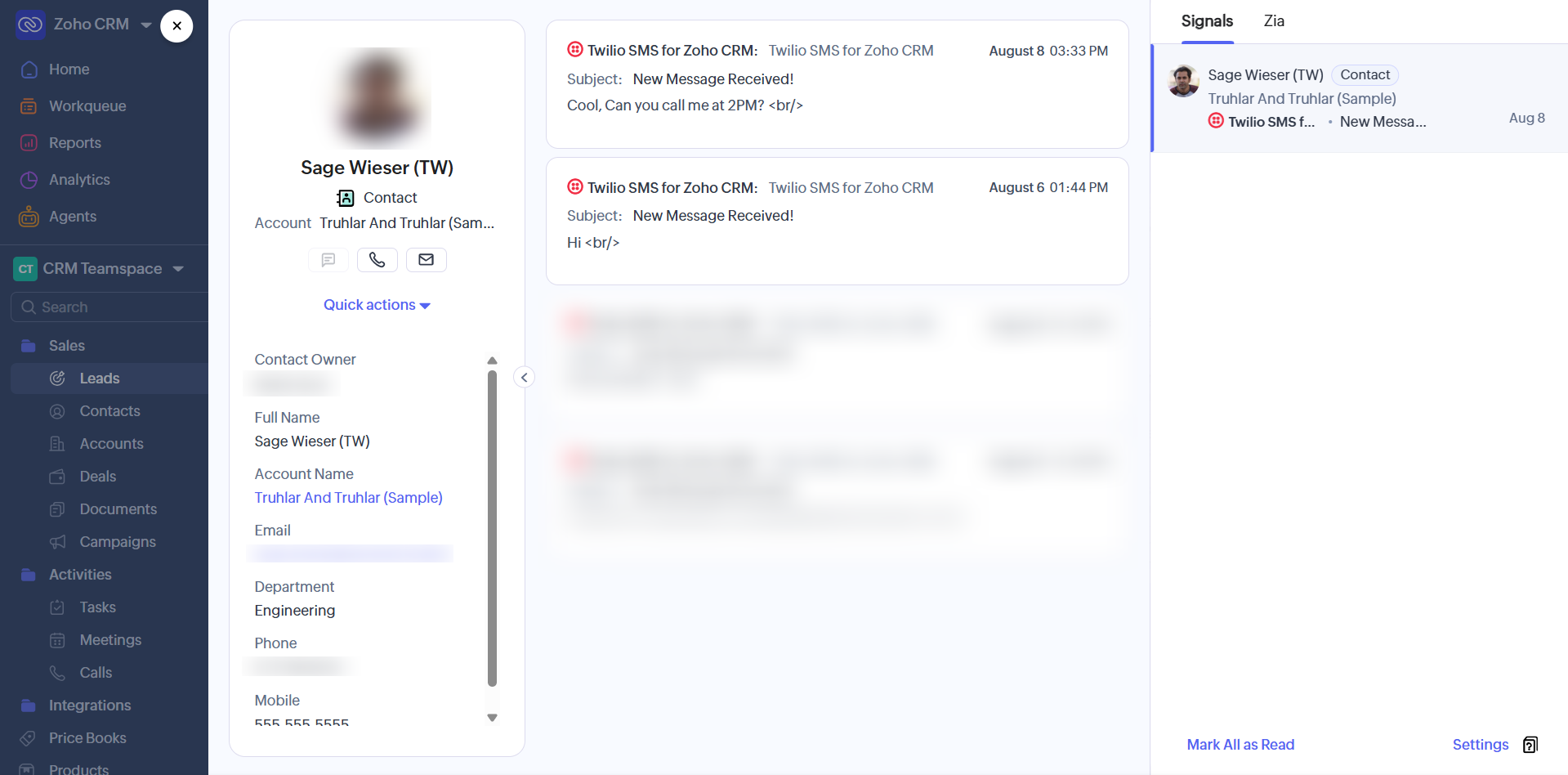
📷 Refer to the attached screenshot to see how an incoming SMS is displayed in
Zoho CRM.
When an incoming message is received:
- The incoming SMS is associated with the corresponding CRM Contact.
- A notification appears in the Signals panel, indicating that a New Message has been received.
- The message is displayed with Twilio SMS for Zoho CRM as the source, allowing you to identify that the notification was generated from an incoming SMS.
- You can select the incoming message notification to view the message details and access the associated contact information.
This allows your team to receive customer replies within Zoho CRM without
needing to monitor the Twilio account separately, making it easier to respond
to incoming SMS conversations and keep communication connected to the CRM record.
💡 Example: When a customer replies to a Twilio SMS, the reply can appear
as a New Message Received notification in the CRM's Signals panel,
along with the associated Contact.
You can view incoming SMS notifications by clicking the Notifications
(🔔) icon in the top-right corner of the Zoho CRM header.
| Country Name | Region Code |
|---|---|
| India | IN |
| United States | US |
| Canada | CA |
| United Kingdom | GB |
| Australia | AU |
| Germany | DE |
| France | FR |